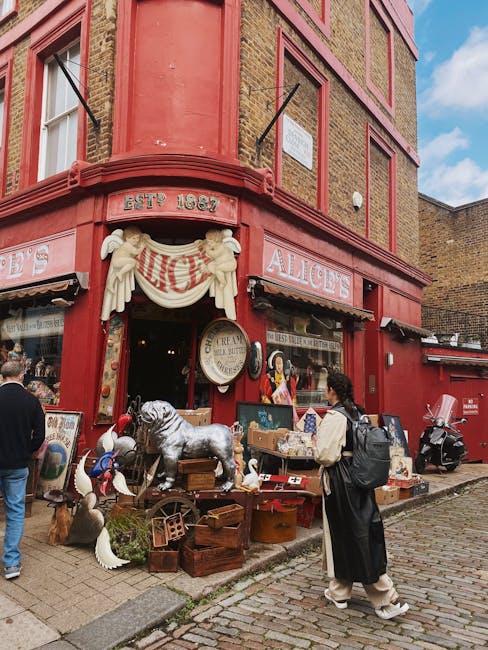
Portobello Road rubbish removal guide for market traders

If you trade on Portobello Road, you already know the rhythm: set up early, serve customers fast, keep the stall looking sharp, then clear down without getting in anyone's way. Waste is part of the job, but messy waste is a different story altogether. This Portobello Road rubbish removal guide for market traders explains how to handle packaging, broken stock, food waste, display materials, and end-of-day clutter in a way that is practical, efficient, and far less stressful than leaving it until later.
Truth be told, rubbish on a busy market street can turn into a problem quickly. It affects your pitch presentation, slows down pack-down, and can create avoidable hygiene and safety issues. The good news? With the right routine, the right disposal method, and a few sensible habits, waste management becomes one of those background tasks that just works. Let's make it simpler.
Why Portobello Road rubbish removal guide for market traders Matters
On a street like Portobello Road, waste is not just an afterthought. It is part of your trading footprint. A tidy stall helps you look organised, professional, and ready for business. A pile of flattened boxes, food scraps, tie-wraps, and torn bags does the opposite in about ten seconds flat.
For market traders, the stakes are higher than they are for a normal shop counter. You are working in a shared public space with constant footfall, tight walkways, and limited room to leave anything lying around. Even a small build-up of rubbish can become awkward for neighbours, customers, and anyone moving stock through the area.
There is also the operational side. If you are loading out stock, closing late, or dealing with mixed waste at the end of the day, poor disposal habits cost time. And when time is tight, waste becomes a bottleneck. That is usually when things get rushed, and rushed is where mistakes creep in.
Expert summary: For market traders, the best rubbish removal system is the one that keeps your pitch clear, protects your working space, and avoids end-of-day chaos. Simple, repeatable, and boring in the best possible way.
It is worth saying that not every trader produces the same kind of waste. A clothing stall, an antiques dealer, a food vendor, and a trader selling homeware will all need slightly different removal routines. That is why a one-size-fits-all approach rarely works for long.
How Portobello Road rubbish removal guide for market traders Works
In practice, market rubbish removal is about sorting, storing, collecting, and clearing waste in a predictable way. The aim is not just to get rid of rubbish. It is to move it off the stall safely, keep it separated where possible, and make sure it is handled in a legal and sensible manner.
Most traders end up using a mix of methods, depending on how much waste they create and how quickly it accumulates. Some will bag and remove waste themselves after trading. Others will use a commercial waste service for recurring collection. Some need same-day help after a big delivery, a stall refit, or a particularly busy trading weekend.
A practical workflow usually looks like this:
- Separate the waste as you go, instead of letting it build up in one big mixed pile.
- Keep lightweight packaging, food waste, and bulky items apart where possible.
- Use sturdy bags, boxes, or containers that will not split halfway down the road.
- Move waste to a designated holding point only when it is safe and permitted.
- Arrange removal promptly so rubbish does not sit around longer than needed.
If your waste includes furniture, display stands, damaged stock, or items you no longer need, a broader business waste removal service may be more suitable than trying to piece it all together yourself. For traders dealing with larger items, the site's general waste removal support can also be a practical fit.
And yes, the real-world part matters. When the market is busy, even a simple job like getting rid of broken boxes can become a juggling act. That is why planning ahead is not overkill; it is the difference between a smooth pack-down and a slightly frazzled one.
Key Benefits and Practical Advantages
Good rubbish removal is not glamorous, but it pays back in small, very tangible ways. You feel the difference on the day, and so does everyone around you.
- Cleaner presentation: A neat stall looks more trustworthy and more inviting.
- Faster pack-down: Waste sorted during trading is much easier to clear at close.
- Better safety: Less clutter means fewer trip hazards and less blocked movement.
- Reduced stress: You are not staring at a growing mound of rubbish all day.
- Improved neighbour relations: Nearby traders appreciate a pitch that stays under control.
- More flexible trading: You can adapt to busy days, deliveries, or last-minute stock changes more easily.
There is a quieter benefit too. It helps protect your reputation. Customers often notice the small things: the clean folding table, the fresh display cloth, the absence of overflowing bags at the back. They may not say it out loud, but they do notice. Of course they do.
For traders with stock that includes worn items, old display furniture, or end-of-line pieces, services like furniture disposal and furniture clearance can help keep the stall and storage space from becoming a catch-all for unwanted bits and pieces.
Who This Is For and When It Makes Sense
This guide is for any Portobello Road market trader who deals with physical waste, packaging, display materials, or items that cannot simply be folded away and forgotten. That covers a lot of ground.
You will likely find it especially useful if you are:
- a regular stall holder who trades every week
- a pop-up vendor with short setup and tear-down windows
- selling goods that arrive in heavy packaging
- handling fragile stock that creates more broken material than expected
- running a food or drink stall with fast-moving waste
- updating your pitch layout and clearing out old display pieces
- moving between storage, flat, and market space, all in one day
It also makes sense if you are at one of those stages where waste has quietly outgrown your usual routine. You know the moment: the bags are too full, the boxes are piling up, and the "we'll deal with it later" plan has clearly stopped being a plan.
If your waste is more general and business-focused, the dedicated commercial waste support is worth exploring. If you only need occasional help after a trading event, a one-off collection may be enough. If waste is part of your everyday operation, regular removal usually works out better.
Step-by-Step Guidance
Here is a straightforward way to build a rubbish removal routine that actually sticks.
1. Start with waste categories
Look at the kind of rubbish your stall creates. Packaging, cardboard, food waste, damaged goods, plastic wrap, wood offcuts, fabric scraps, and old display items all behave differently. Mixing everything together makes the job harder later.
2. Decide what stays on-site and what goes immediately
Some waste can wait in sealed containers until pack-down. Other items, especially messy or bulky ones, are better removed during the day if you have the space and permission to do so. The more you can reduce end-of-day load, the easier your close becomes.
3. Use the right containers
Use bags that will not tear, boxes that will not collapse, and bins that are easy to move. A flimsy bag full of soggy packaging is a small disaster in waiting. Nobody needs that on a windy afternoon.
4. Keep your route clear
Think about where waste will travel from your stall to your disposal point. Keep it away from customer flow, narrow gaps, and any area where stock is being carried. It sounds basic, but it saves a lot of awkward shuffling.
5. Book removal before the pressure hits
Do not wait until waste becomes unmanageable. If you know you have a busy weekend, a special event, or a large delivery coming in, arrange removal in advance. That way, you are not trying to solve the problem while also serving customers.
6. Review what happened after trading
At the end of a trading cycle, ask a simple question: what created the most waste, and what could be reduced next time? Often, one packaging choice or display habit creates half the mess. Fix that and you will notice the difference quickly.
If a stall refresh leaves you with bulky non-stock items, nearby clearance services such as waste removal and builders waste clearance can be relevant, especially where mixed debris or heavy materials are involved.
Expert Tips for Better Results
Over time, the best systems are usually the ones that are plain and repeatable. Nothing fancy. Just reliable.
- Pre-crush cardboard where possible. It sounds obvious, but compacting cardboard early saves a surprising amount of room.
- Keep a small "waste kit". Include spare bags, gloves, tape, wipes, and a marker pen. One less thing to hunt for when the day gets busy.
- Label containers by waste type. Even simple labels help staff or helpers keep things separated.
- Protect your back and hands. Use proper lifting technique and do not overfill bags. Really, don't.
- Plan for wet weather. In London, a dry rubbish plan can become a soggy rubbish plan very quickly.
- Keep an eye on spill-prone items. Anything food-related, liquid-heavy, or dusty should be contained early.
A small, useful habit is to clear as you trade, not after. If a box is empty, flatten it then and there. If a wrapper is no longer needed, bin it now. That tiny discipline saves a lot of catch-up work later.
When traders store stock or tools off-site, there is often a crossover with office clearance or home clearance style needs, especially if your business space is mixed with storage and admin. It is not glamorous, but it is often very real.
Common Mistakes to Avoid
The biggest waste management problems usually come from a few predictable missteps. Nothing dramatic. Just small habits that snowball.
- Leaving everything until closing time: End-of-day pile-ups are harder to manage and more likely to be rushed.
- Mixing all waste together: Cardboard, food waste, damaged stock, and bulky items should not all end up in one bag if you can help it.
- Using weak bags or containers: Split bags are messy, unsafe, and oddly demoralising.
- Not planning for bulky waste: Old display furniture and broken fittings need a different approach from lightweight packaging.
- Forgetting about hazardous or restricted items: Some waste needs special handling, not a general bin.
- Ignoring permissions or site rules: A market space is shared space, so waste handling has to fit the environment.
The sneaky one is assuming a small amount of waste does not matter. It does. A few "temporary" bags left in the wrong place can become a headache for everyone by the afternoon. You know how it goes.
Tools, Resources and Recommendations
You do not need a truckload of specialist gear to manage market rubbish well. But a few practical tools make life easier.
| Tool or resource | Why it helps | Best for |
|---|---|---|
| Heavy-duty sacks | Reduce tearing and leaking | General stall waste, packaging, lighter mixed rubbish |
| Cardboard flattening tool or cutter | Helps compress boxes faster | Stalls with frequent deliveries |
| Stackable crates | Keep waste separated and easy to move | Multi-category waste streams |
| Gloves and wipes | Useful for hygiene and quick clean-ups | Food stalls, handling greasy packaging |
| Clearance service booking | Useful when waste exceeds normal disposal capacity | Bulky items, large clear-outs, mixed waste loads |
For traders who need a more structured removal option, online booking can be a convenient next step when timing matters. If you are comparing costs or planning around a busy week, the page on pricing and quotes is the sensible place to start.
Where sustainability matters to your brand or your customers, the site's recycling and sustainability information can help you think more clearly about reuse, sorting, and reduced landfill dependency. It is not just a nice-to-have anymore. Many traders now treat it as part of the business model.
Law, Compliance, Standards, or Best Practice
Waste handling for traders is one of those areas where a little care goes a long way. In the UK, businesses are generally expected to manage their waste responsibly, keep it secure, and use properly authorised routes for disposal. If waste is collected on your behalf, it should be handled by a legitimate operator that understands commercial waste requirements.
That does not mean every trader needs to memorise regulations. Far from it. But you should know the basics: do not leave waste where it causes obstruction, do not rely on household disposal habits for business rubbish, and take extra care with anything that could be classed as hazardous or restricted.
Good best practice also includes basic safety and accountability. That means:
- keeping walkways clear
- separating waste where practical
- avoiding unsafe lifting
- storing rubbish securely until collection
- using services that are clear about how waste is handled
If your stall generates anything unusual, such as electrical items, refrigeration units, sharp metal fittings, or contaminated materials, handle that separately. For example, a damaged appliance will not belong in the same process as cardboard boxes. In those cases, specialist support such as fridge and appliance removal or hazardous waste disposal may be more appropriate.
It is also sensible to pay attention to the basics of safety and service standards. The pages on health and safety policy, insurance and safety, and payment and security are useful if you want reassurance before booking a waste service. Not fancy, just sensible due diligence.
Options, Methods, or Comparison Table
There is more than one way to handle market rubbish. The right method depends on volume, timing, and what kind of waste you create.
| Method | Best for | Pros | Limitations |
|---|---|---|---|
| Self-managed bagging and removal | Small, light waste volumes | Low complexity, flexible, easy to start | Can be tiring; not ideal for bulky items |
| Regular commercial collections | Consistent waste generation | Predictable, less day-to-day stress | Needs planning and ongoing arrangement |
| One-off clearance | Large clean-outs or unusual jobs | Fast reset after an event or refit | Not designed for everyday small waste |
| Specialist item removal | Appliances, hazardous or awkward items | Safer and more suitable for restricted items | Requires correct separation and timing |
For many Portobello Road traders, the best answer is a mix. Routine waste gets handled one way, bulky or awkward waste another. That mix-and-match approach is often what keeps things manageable without overcomplicating the day.
If your trader space doubles up as storage, you may also find related services such as flat clearance, loft clearance, or even garage clearance useful when you are clearing out stock overflow or back-room clutter. A bit of overlap is normal.
Case Study or Real-World Example
Imagine a trader on a busy Saturday who sells homeware and decorative pieces. By lunchtime, they have cardboard from incoming stock, torn paper wrap, a couple of broken display items, and a stack of old packaging that has been sitting behind the table because there has not been time to deal with it properly.
At first, it looks harmless. Just a few bags, right? But by 4 p.m., those bags are in the way, customers are stepping around them, and the stall back area has started to feel cramped. Packing down becomes slower because items have to be moved twice. The trader is tired, the road is busy, and everyone is slightly more impatient than usual.
Now compare that with a trader who flattens cardboard as it arrives, keeps broken items separate, uses sturdy bags, and arranges removal before the weekend rush. Their stall stays cleaner through the day. Pack-down is quicker. They leave the pitch without that weird after-shift feeling that you have forgotten something. Small difference, big relief.
It is not magic. It is just a process that respects the reality of market trading.
Practical Checklist
Use this as a quick end-of-day or pre-trading check.
- Have I separated cardboard, general waste, and bulky items?
- Are all bags sealed and strong enough to carry safely?
- Have I removed or flattened empty packaging as I went?
- Is anything sharp, wet, or potentially hazardous stored separately?
- Do I know what needs to be taken away today versus later?
- Have I kept customer walkways and neighbouring spaces clear?
- Is there anything too large or awkward for normal disposal?
- Do I need a one-off or recurring waste solution?
- Have I checked any service details, safety expectations, or booking requirements?
- Is the stall ready to be left tidy, not just technically empty?
If you can tick most of these off, you are already ahead of the curve. Not perfect. Just organised enough to keep the day flowing.
And if you are at the point where waste is becoming a bigger issue than it should be, it may be worth exploring the company's wider service pages, including about us to understand the approach and contact us when you are ready to talk through a job. Simple enough.
Conclusion
For Portobello Road traders, rubbish removal is really about control. Control of space, time, presentation, and the small stress points that can make a trading day feel longer than it should. When waste is managed well, everything else becomes easier: setup is smoother, pack-down is calmer, and your pitch looks like it belongs in a busy, professional market environment.
The best system is usually the one you can repeat without thinking too hard. Keep it practical. Keep it tidy. Adjust it as your trading changes. And if you need help clearing waste that is getting in the way of trading, it is worth using a service that understands commercial reality rather than just offering a generic collection.
Get a free quote today and see how much you can save.
And if you are doing the work properly, there is a nice little feeling at the end of the day when the stall is down, the walkway is clear, and the last bag is gone. Quiet win. Big one, really.
Frequently Asked Questions
What type of rubbish do Portobello Road market traders usually produce?
Most traders deal with packaging, cardboard, tape, food waste, damaged stock, and display materials. Some also produce bulky waste such as broken fittings or old furniture. The mix depends on the stall type, which is why a flexible disposal plan is usually best.
Is commercial waste removal better than handling waste myself?
For small waste volumes, self-handling may be fine. If you trade regularly or produce mixed rubbish, a commercial service is often more efficient and less stressful. It saves time at pack-down and helps keep waste under control during busy periods.
Can I put everything in one bag and deal with it later?
You can, but it is rarely the best idea. Mixed waste is harder to move, harder to sort, and more likely to cause problems if it includes food residue, sharp items, or bulky materials. Separating waste as you go is much easier in the long run.
What should I do with broken display items or old stock?
Broken display items and unwanted stock should be separated from everyday rubbish. Depending on the material, they may need a clearance-style service rather than a simple bin solution. If the items are bulky, furniture-style removal may be more suitable.
How do I keep rubbish from affecting my stall presentation?
Use small, frequent clear-outs rather than one big end-of-day tidy. Flatten cardboard early, keep spare bags on hand, and store waste out of customer sight whenever possible. Clean presentation is mostly about habits, not perfection.
Do market traders need to think about hazardous waste?
Some do. If your stall generates items like damaged electrical goods, chemicals, contaminated materials, or other unusual waste, treat them separately and carefully. Those items should not be handled like ordinary packaging or cardboard.
What is the easiest waste routine for a busy trading day?
The easiest routine is usually the one with the fewest decisions. Sort as you go, keep a clear container for light waste, flatten boxes early, and book removal before waste starts to build up. That way, the end of the day does not turn into a scramble.
Can I use the same waste approach for a market stall and a storage space?
Not always. Storage spaces often generate different waste, especially if you are clearing old stock, shelving, or furniture. In those cases, a more general clearance service may be useful alongside your normal trade waste process.
How do I know if I need a one-off clearance or regular collections?
If waste comes up occasionally, a one-off clearance may be enough. If you create the same type of waste every week, regular collections are usually better. The decision usually comes down to consistency, volume, and how much time waste is stealing from your day.
What should I look for before booking a waste service?
Look for clear pricing, sensible safety information, and a service that understands business waste rather than only domestic clear-outs. It also helps if the company explains how it handles collections, what it accepts, and how to book without fuss.
How can I make rubbish removal cheaper in the long run?
Reduce waste at source where you can, flatten packaging early, separate bulky items from general rubbish, and avoid emergency clear-ups whenever possible. The more controlled your routine, the less likely you are to need rushed, last-minute help.
What is the biggest mistake market traders make with rubbish removal?
Probably waiting too long. Waste starts small, then grows legs. By the time it becomes a visible problem, the job is usually slower, messier, and more expensive to fix. A little consistency makes a surprisingly big difference.
Where can I learn more about the company and services available?
You can start with the recycling and sustainability page, then review the service information that best matches your waste type. If you want a clearer understanding of the company's approach, the about us page is a good next stop.